How to Choose the Right Capacity for a Cashew Nut Processing Line
2026-11-16Choosing the right capacity is the first decision when you plan a cashew nut processing line, and it is also the one that is hardest to change later. A line that is too small leaves raw nuts waiting and orders unfilled. A line that is too large ties up money in equipment that runs half empty. The right size is the one that matches your raw nut supply, your labour, and the market you sell into — not the biggest machine in the catalogue.
Start with your raw nuts, not with the machine. How many tonnes of raw cashew nuts can you reliably buy in a season, and how many working days will your plant run? A processor who buys 500 tonnes a year and runs 250 days needs a very different line from a buyer who handles 5,000 tonnes in a short harvest window. Work out the daily raw nut volume first, then choose equipment that handles that volume comfortably, with a little headroom for peak days. Gashili, founded in 2010, builds cashew processing equipment to order, and every capacity can be customised to the customer's requirements, from 200–300 kg/h up to 20 TPH, so the line is sized around your numbers rather than the other way round.
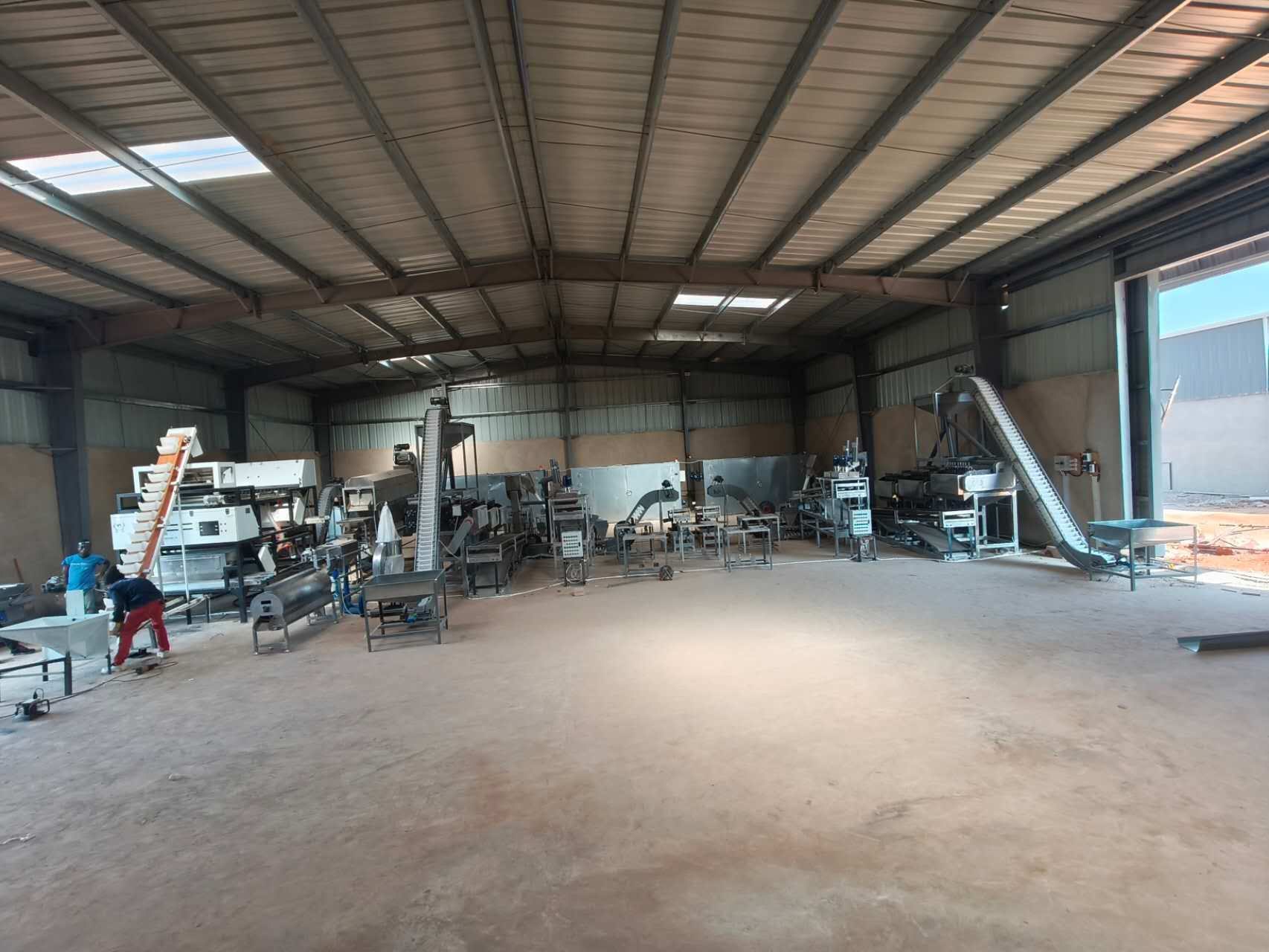
Think in stages, not in a single number. A cashew nut processing line is a chain: grading and cooking raw nuts, shelling, drying, peeling, grading the kernels, and packing. Each stage must keep pace with the others. If the shelling machines can handle 1,000 kg/h but the peeling section only manages half that, kernels pile up between stages and the whole line runs at the slower speed. When you compare offers, check the capacity of each key stage — shelling, peeling, and grading — and ask how they are balanced. A well-matched line runs steadily; a mismatched one stops and starts.
Peeling quality matters as much as speed. The peeling rate decides how many whole kernels you recover, and whole kernels sell for more than broken ones. Gashili peeling machines reach a peeling rate of more than 95%, which means fewer kernels are damaged or left with skin, and less hand work is needed to finish the job. A slightly slower line with a high peeling rate often earns more than a faster line that breaks kernels.
Small lines and large lines suit different buyers. A 200–300 kg/h line fits a workshop or a new processor testing the market: it needs fewer workers, less floor space, and a smaller steam boiler. A medium line suits a processor with steady supply contracts, while a large line up to 20 TPH fits a factory serving export buyers with big orders. There is no single best size. The best size is the one your supply can feed every working day.
Leave room to grow. Demand rarely stays flat. A line built from separate machines — shelling machines, peeling machines, grading machines, dryers — can be extended later by adding a machine or upgrading a single stage, instead of replacing the whole line. When you plan the layout, keep space for one more machine and check that your boiler and power supply can support the next step. Customisable capacity makes this easier: you can start at the size you need today and expand the configuration as orders grow.
Talk to the manufacturer before you decide. A good supplier will ask about your raw nuts, your target output, your labour, and your site before recommending a configuration, because two buyers with the same headline capacity can need very different machines. Tell them your daily raw nut volume, how many days a year you plan to run, and whether you sell whole kernels or broken pieces, and they can match each stage of the line to your real working conditions.
Get a quote for a line sized to your numbers. Share your target capacity and configuration — raw nut volume, working days, and whether you need a single machine or a complete turnkey line — through the contact form on this website, or message us on WhatsApp at +86-15890067264. We will work out a configuration that fits your supply, and reply with a quotation.

For all inquiries, please fill in the form below (* are required) to send us a brief message, and we will get back to you as soon as possible.