Drying vs Roasting Cashew Nuts: What Is the Difference?
2026-11-26Many buyers ask about drying machines and roasting machines together, and sometimes the two steps get mixed up. Drying and roasting both use heat, and both are part of cashew nut processing, but they do different jobs at different points in the line. Understanding the difference helps you choose the right equipment and avoid paying for a step you do not need.
What Drying Does
Drying comes early in the process, after shelling. Once the hard outer shell is removed, the kernel still carries moisture and is covered by the thin brown skin, the testa. A drying machine brings the moisture of the shelled kernels down to a level where the skin becomes loose and brittle. That is what makes the next step, peeling, work well. With properly dried kernels, a peeling machine can reach a peeling rate of more than 95%, leaving clean white kernels with little breakage.
Drying is therefore a preparation step, not a finishing step, and it does not change the flavour of the kernel the way roasting does. Almost every cashew nut processing line includes drying, because peeling without it is slow and gives poor results. The dried kernels then move on to peeling, grading and packing, or to roasting if roasted kernels are the final product.
What Roasting Does
Roasting comes much later in the process, after peeling and grading. Its purpose is flavour, colour and texture. Roasting gives the kernel the taste and crunch that consumers expect from roasted cashew nuts, and it is a finishing step for kernels that will be sold ready to eat. Unlike drying, roasting is optional: it depends on what product you plan to sell. A line that produces raw white kernels for further processing does not need a roasting machine at all, while a line aimed at the snack market usually does.
As a finishing step, roasting is placed at the end of the line. The kernels that go into a roasting machine have already been shelled, dried, peeled and graded, so the roaster works with clean, uniform kernels. That order matters: roasting before peeling would make the skin harder to remove.
The Key Differences at a Glance
The simplest way to remember the difference is by purpose and position. Drying prepares the kernel for peeling, and it sits in the middle of the line, between shelling and peeling. Roasting finishes the kernel for eating, and it sits at the end of the line, after peeling and grading. Drying is needed on nearly every line; roasting is needed only when roasted kernels are the product you sell.
The difference also shows when a step is missing. A line without drying will struggle at peeling, with more broken kernels. A line without roasting simply produces raw kernels instead of roasted ones, which is fine if raw kernels are what your buyers want. So when you plan a line, drying is a question of how well the line runs, while roasting is a question of what you sell.
Where Each Step Fits in the Line
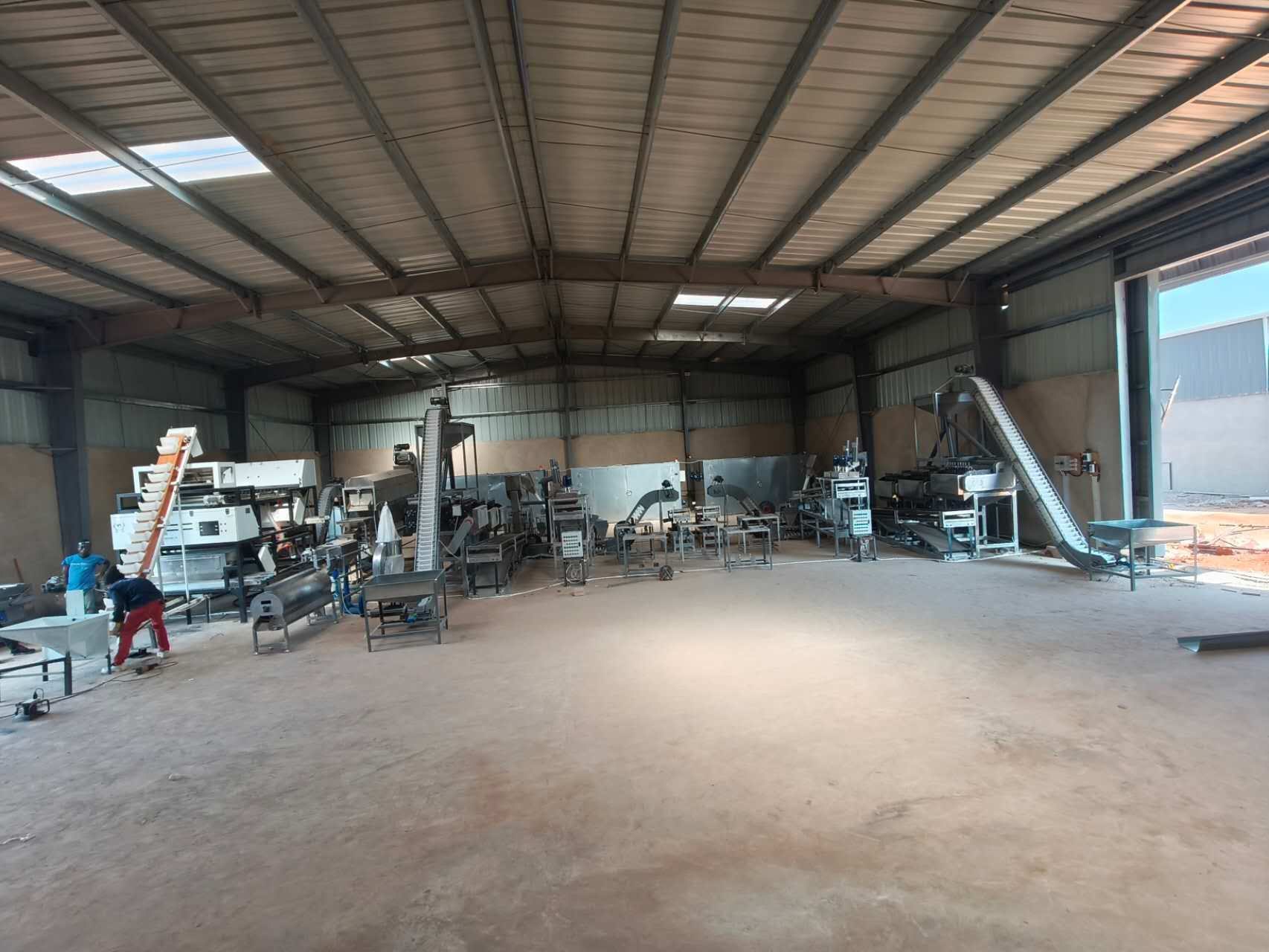
A typical cashew nut processing line runs in this order: shelling, drying, peeling, grading, and then packing, with roasting added at the end when roasted kernels are required. Each machine in the line is chosen to match the capacity of the others, so that kernels flow from one step to the next without a bottleneck. All capacities on our lines are customizable to customer requirements, with a customizable range from 200-300kg/h to 20TPH, so a drying machine and a roasting machine can both be sized to your planned output.
If you add one of these steps to an existing line, match the new machine to the output of the step before it. A dryer that is too small will hold up peeling, and a roaster that is too small will hold up packing. Tell us your output and the product you want to make, and we can help you work out which machine fits.
A Common Buyer Mistake
The most common mistake we see is a buyer asking for a roasting machine when the real problem is at peeling, or asking for a bigger dryer when the kernels are already dry enough. Before choosing a machine, say where in the line the problem is: are the kernels hard to peel, or do you want a roasted flavour? The answer decides whether you need drying, roasting, or neither. If you are not sure, describe your current process and your final product, and we will point you to the right step.
Conclusion
Drying and roasting are not two versions of the same step. Drying prepares shelled kernels for peeling and keeps the line running smoothly, while roasting finishes peeled kernels for the snack market. Most lines need drying; only lines that sell roasted kernels need roasting. Knowing which step you need is the first step to building a line that fits your product and your output.
Get a Quote: contact us for a price based on your capacity and configuration. You can reach us on WhatsApp at +86-15890067264, or send your requirements through the contact form on this website, and we will reply with a quotation for the machine or line that fits your needs.

For all inquiries, please fill in the form below (* are required) to send us a brief message, and we will get back to you as soon as possible.