Common Mistakes When Buying a Cashew Nut Processing Line
2026-11-28A cashew nut processing line is a long-term investment. It will run for years, and a wrong choice at the buying stage is expensive to fix later. Many buyers make the same avoidable mistakes. Here are the most common ones, and how to avoid them.
Mistake 1: Choosing Capacity From a Single Number
The most frequent mistake is picking a capacity from one number in a catalogue. A line rated at a certain output per hour only delivers that output when the raw nuts, the moisture level and the working rhythm match the design conditions. Raw cashew nuts vary in size and moisture from season to season and from origin to origin, so real output moves up and down.
Think about your actual plan instead: how many hours a day the line will run, how much raw material you can supply steadily, and whether you expect to grow. Every cashew nut processing line from Gashili can be built to the capacity the customer needs, with a customizable range from 200-300kg/h to 20TPH. Tell the supplier your real daily target and your growth plan, and let the configuration follow that, not the other way round.
Mistake 2: Judging a Line by One Machine Only
A processing line is a chain, and a chain is only as strong as its weakest step. Some buyers focus all their attention on the shelling machine and forget the steps around it. If grading is poor, the sheller receives mixed sizes and breaks more kernels. If peeling is weak, the kernels that come out still carry skin and need extra hand work. If drying is uneven, roasting suffers later.
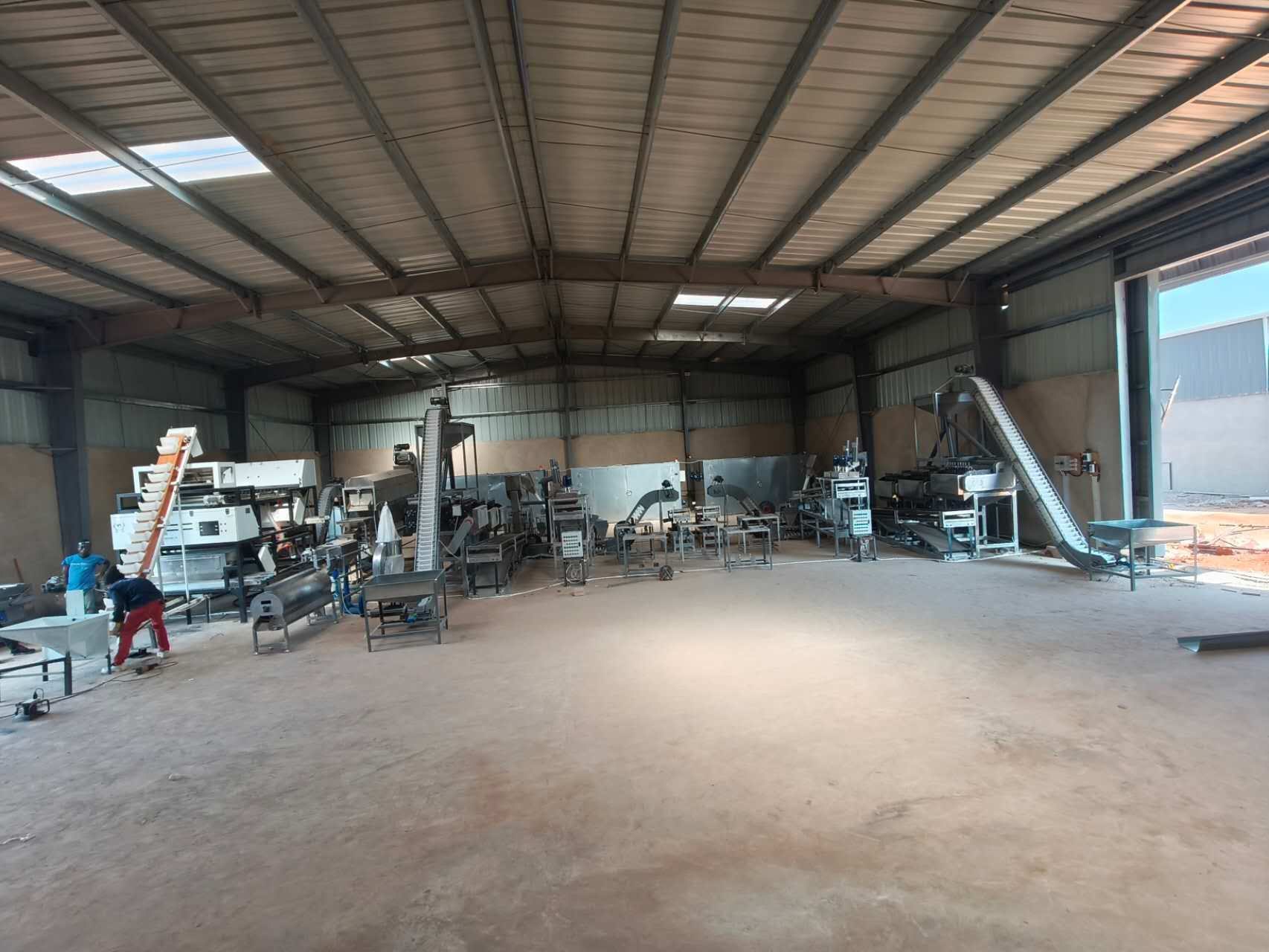
Look at the whole flow: grading, shelling, drying, peeling, roasting and packing, and how each step matches the next. A balanced line with matched capacities at every step runs more smoothly than a line with one strong machine and several weak ones.
Mistake 3: Ignoring the Peeling Rate
Peeling looks like a small step, but it decides how much hand labour the line still needs. A low peeling rate means workers must peel the remaining kernels by hand, which adds cost every single day the line runs.
Ask for the peeling rate before you buy, and ask how it is measured. The peeling machines on Gashili lines reach a peeling rate of more than 95%, which keeps manual touch-up work to a minimum. A supplier who cannot give a clear peeling figure is a warning sign.
Mistake 4: Forgetting the Steam Boiler and the Drying Step
Shelling and peeling get most of the attention, while the steam boiler and the drying machine are treated as afterthoughts. They are not. Steaming softens the shell before shelling, and drying sets the right condition for peeling. If the boiler is too small, shelling becomes harder and breakage rises. If drying is uneven, peeling quality falls.
Check that the boiler capacity matches the line, and that the drying step fits between shelling and peeling in the layout. These two supporting steps quietly decide the quality of the finished kernel.
Mistake 5: Not Planning for Raw Material Differences
Cashew nuts are a natural product. Size, shell thickness and moisture change with the growing region and the harvest. A line configured for one type of raw nut may struggle with another.
Before ordering, describe your raw material honestly: where it comes from, the size range, and the moisture you usually receive. A good supplier will adjust the grading settings, the shelling gap and the drying time to match. Buying a fixed configuration without this conversation is how lines end up underperforming from the first week.
Mistake 6: Comparing Offers by One Number Alone
When several suppliers send offers, it is tempting to compare a single figure and pick the lowest. But two offers at different figures rarely describe the same line. One may include a steam boiler, a peeling machine and a packing section; the other may leave them out. One may cover a wider capacity range; the other may not.
Compare offers line by line: which machines are included, what capacity each step is built for, and what configuration differences explain the gap. A cheaper offer that misses a whole step is not cheaper once that step has to be added later.
A Short Checklist Before You Order
Before you confirm an order, check these points: your real daily capacity target, the size and moisture of your raw nuts, a peeling rate of more than 95%, a boiler and dryer matched to the line, and a full list of the machines included in the offer. If any answer is unclear, ask before you pay, not after the line arrives.
Gashili has been building cashew nut processing equipment since it was founded in 2010, and every line is configured to the customer's capacity and raw material. If you are planning a line, get a quote based on your capacity and configuration: contact us through the form on this website, or reach us on WhatsApp at +86-15890067264, and we will help you work out the right setup for your factory.

For all inquiries, please fill in the form below (* are required) to send us a brief message, and we will get back to you as soon as possible.